
Annuities
Protect a Portion of Your Retirement Savings and Create Income You Cannot Outlive
What Can an Annuity Do for Your Retirement?
An annuity is a long-term contract issued by an insurance company. Depending on the type of annuity selected, it may protect a portion of your retirement savings from direct market losses, credit interest at a fixed rate or based partly on the performance of a market index, and provide options for dependable retirement income.
When the Paycheck Stops, Priorities Often Change
While you are working, market losses may be easier to recover from because you still have employment income, ongoing retirement contributions, and more time before you need the money.
Once the paycheck stops, a sharp market decline can reduce the value of a 401(k) very quickly. Those savings may be much harder to replace after contributions have stopped and withdrawals have begun.
That does not necessarily mean removing all of your money from the market. It may mean protecting a portion of your retirement savings from direct market losses while creating dependable income for essential expenses.


What Could an Annuity Do for Your Retirement?
Not every dollar in retirement needs to serve the same purpose. Some money may need to remain protected, some may need to generate income, and some may need the opportunity to earn more without being directly exposed to stock-market losses.
Different annuities are designed to meet different needs.
Multi-Year Guaranteed Annuities
GUARANTEED GROWTH
Could Your Safe Money Be Working Harder?
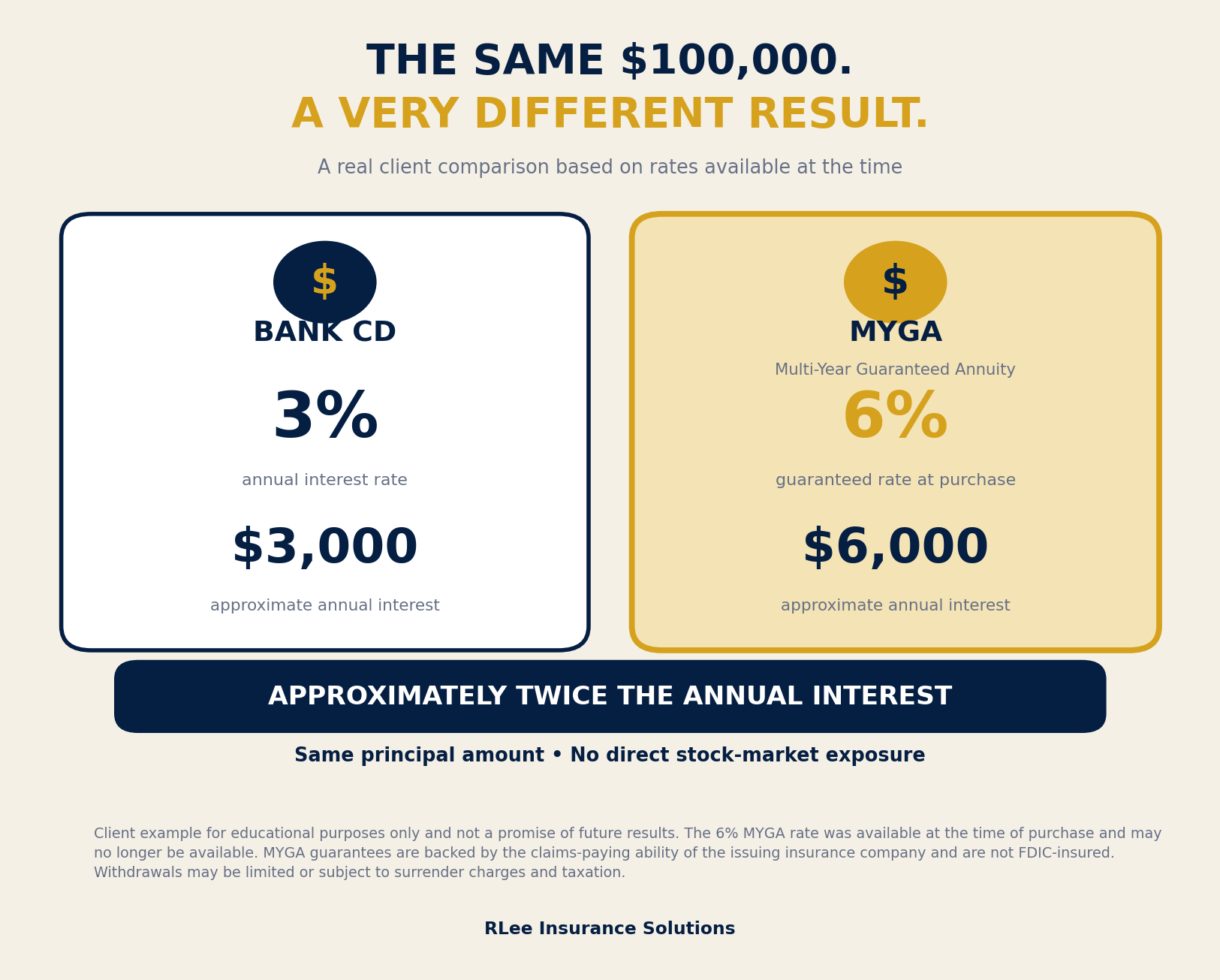
Many people automatically renew a bank CD because it feels familiar and secure. But familiar does not always mean it is providing the strongest guaranteed rate available.A multi-year guaranteed annuity, or MYGA, provides a fixed interest rate for a selected number of years. It can be worth comparing when a CD matures or when you have retirement savings that you want to protect from market losses.
The client shown in this example did not invest additional money or accept direct market risk. We simply compared the available options and found a better use for the same retirement dollars.
Compare Guaranteed OptionsGROWTH WITH PROTECTION
What If You Could Benefit From Market Gains Without Taking Direct Market Losses?
A fixed indexed annuity offers the opportunity to earn interest based partly on the performance of a market index, such as the S&P 500®, without investing your money directly in the market.
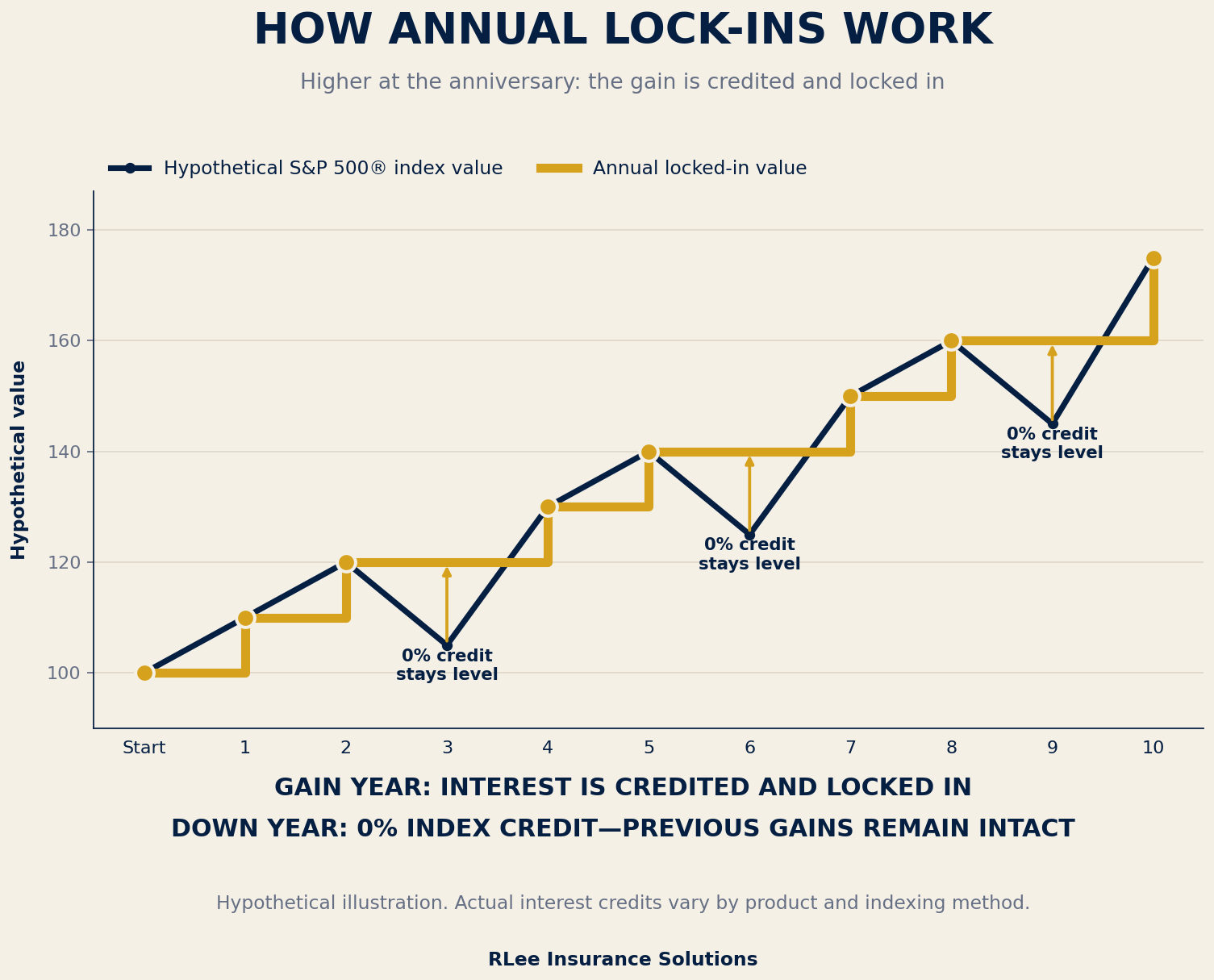
When eligible interest is credited, it becomes part of your protected contract value. A later market decline will not take away interest that has already been credited.
Why Does My Account Currently Show 0%?
With an annual lock-in strategy, the final interest credit is calculated on the contract anniversary. Before that date, your account may show no credited gain because the measurement period has not ended.
If the index is higher on the anniversary date, eligible interest is calculated according to the contract and locked in. If the index is lower, the index credit may be 0%—but you do not lose previously credited interest because of that market decline.
RETIREMENT INCOME PLANNING
When Should Your Retirement Paycheck Begin?
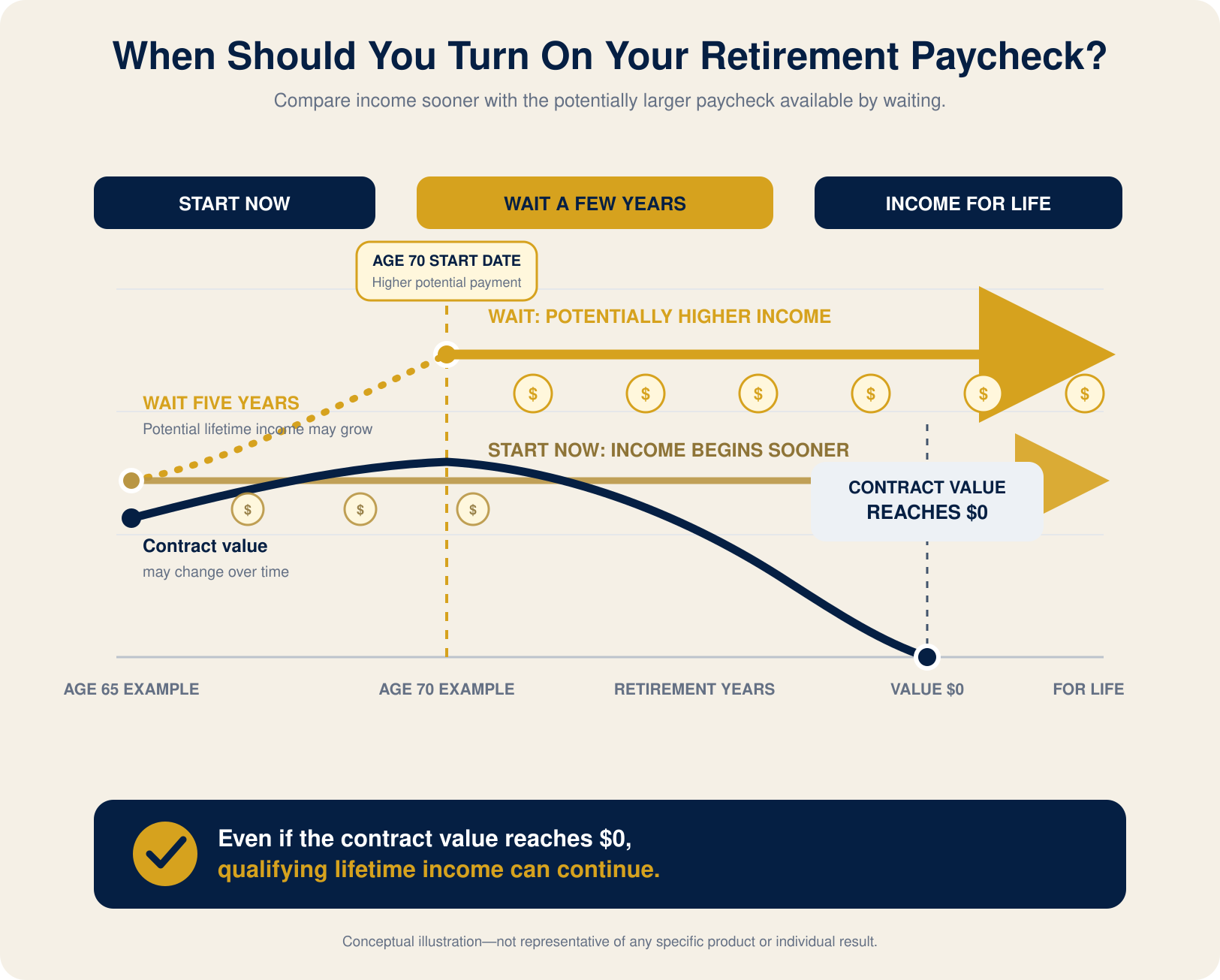
Some annuities allow you to create a dependable income stream that can continue for the rest of your life. You may choose to begin that income immediately—or wait and potentially increase the amount available later.
The right starting date depends on the income you need today, the other resources available to you, and how you want to prepare for the years ahead.
More Than One Product May Be the Answer
For some clients, the strongest strategy is not placing every dollar into a single annuity. An immediate annuity may provide greater income during the first several years of retirement, while another annuity is given time to build a larger income benefit for the future.
With access to real-time rates and thousands of annuity options, I can compare different companies, products and income-starting dates to help you understand what may work best for your retirement.
Compare Your Lifetime Income Options
Lifetime income guarantees depend on the annuity’s payout option or income rider and compliance with all contract requirements. Rider charges, withdrawal limitations and other conditions may apply. Guarantees are backed by the claims-paying ability of the issuing insurance company.

Questions to Consider Before Choosing an Annuity
Find Out Whether an Annuity Fits Your Retirement Goals
Not everyone needs an annuity, and an annuity should not necessarily hold all of your retirement savings. We can review your goals, income needs, access needs, timeline, and comfort with risk to help you determine whether one belongs in your retirement strategy.