
Annuities


Protect a Portion of Your Retirement Savings and Create Income You Cannot Outlive

What Can an Annuity Do for Your Retirement?

An annuity is a long-term contract issued by an insurance company. Depending on the type of annuity selected, it may protect a portion of your retirement savings from direct market losses, credit interest at a fixed rate or based partly on the performance of a market index, and provide options for dependable retirement income.


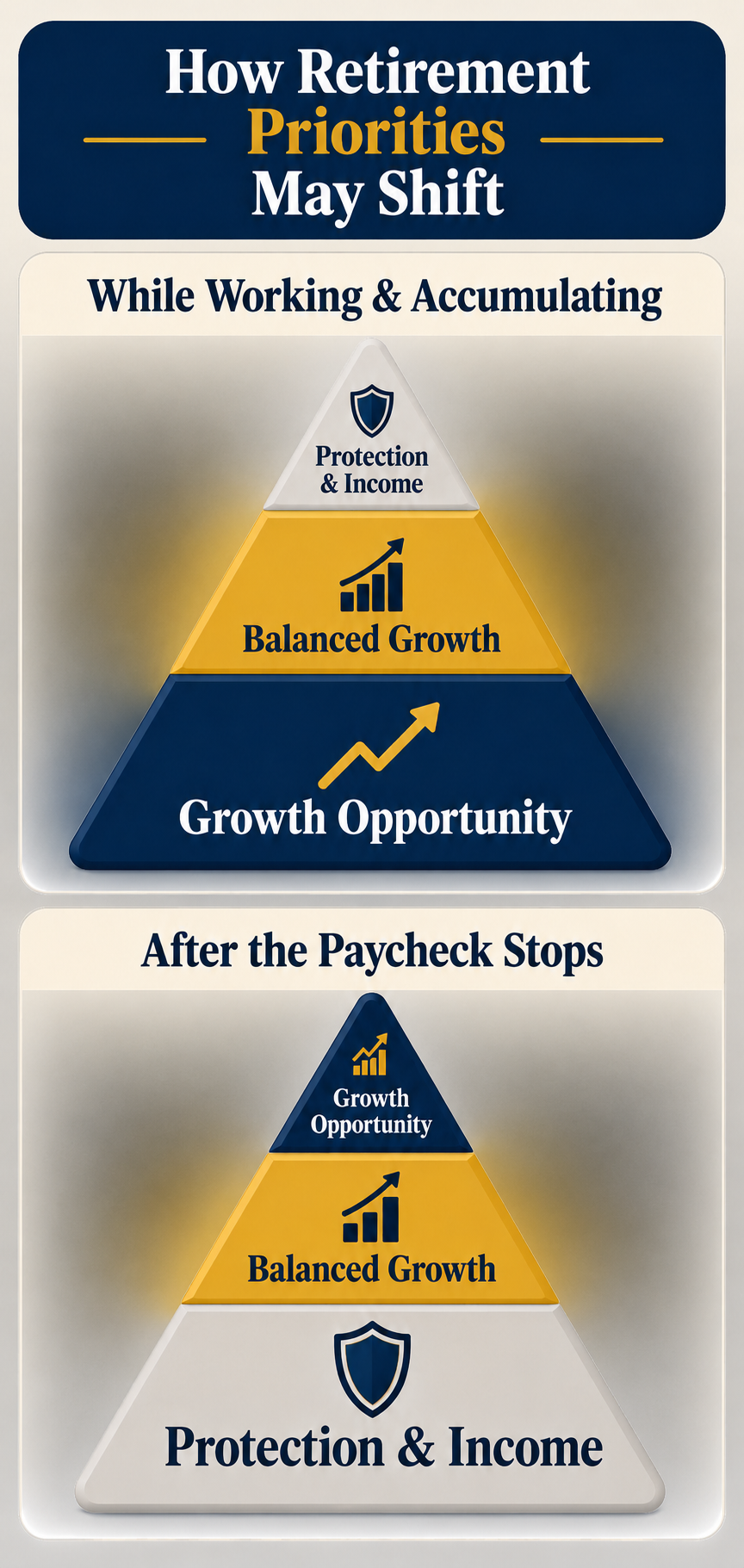
When the Paycheck Stops, Priorities Often Change

While you are working, market losses may be easier to recover from because you still have employment income, ongoing retirement contributions, and more time before you need the money.

Once the paycheck stops, a sharp market decline can reduce the value of a 401(k) very quickly. Those savings may be much harder to replace after contributions have stopped and withdrawals have begun.

That does not necessarily mean removing all of your money from the market. It may mean protecting a portion of your retirement savings from direct market losses while creating dependable income for essential expenses.

RLee Insurance Solutions, LLC BBB Business Review
Retirement priorities shifting from growth to protection

What Could an Annuity Do for Your Retirement?

Not every dollar in retirement needs to serve the same purpose. Some money may need to remain protected, some may need to generate income, and some may need the opportunity to earn more without being directly exposed to stock-market losses.

Different annuities are designed to meet different needs.


Multi-Year Guaranteed Annuities
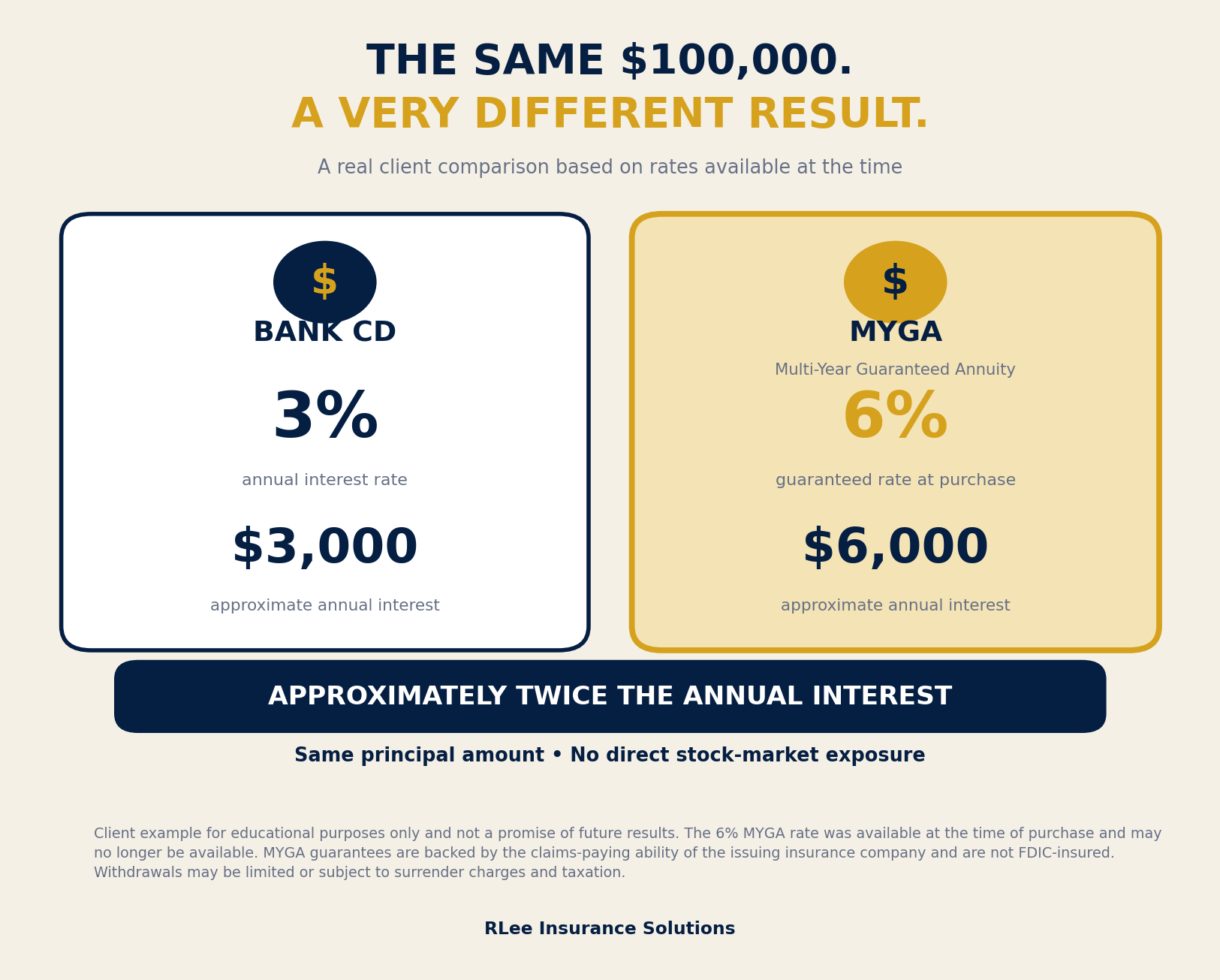
Comparison: 3% bank CD versus 6% annuity
GUARANTEED GROWTH

Could Your Safe Money Be Working Harder?

Many people automatically renew a bank CD because it feels familiar and secure. But familiar does not always mean it is providing the strongest guaranteed rate available.A multi-year guaranteed annuity, or MYGA, provides a fixed interest rate for a selected number of years. It can be worth comparing when a CD matures or when you have retirement savings that you want to protect from market losses.

The client shown in this example did not invest additional money or accept direct market risk. We simply compared the available options and found a better use for the same retirement dollars.

Compare Guaranteed Options

GROWTH WITH PROTECTION

What If You Could Benefit From Market Gains Without Taking Direct Market Losses?

A fixed indexed annuity offers the opportunity to earn interest based partly on the performance of a market index, such as the S&P 500®, without investing your money directly in the market.

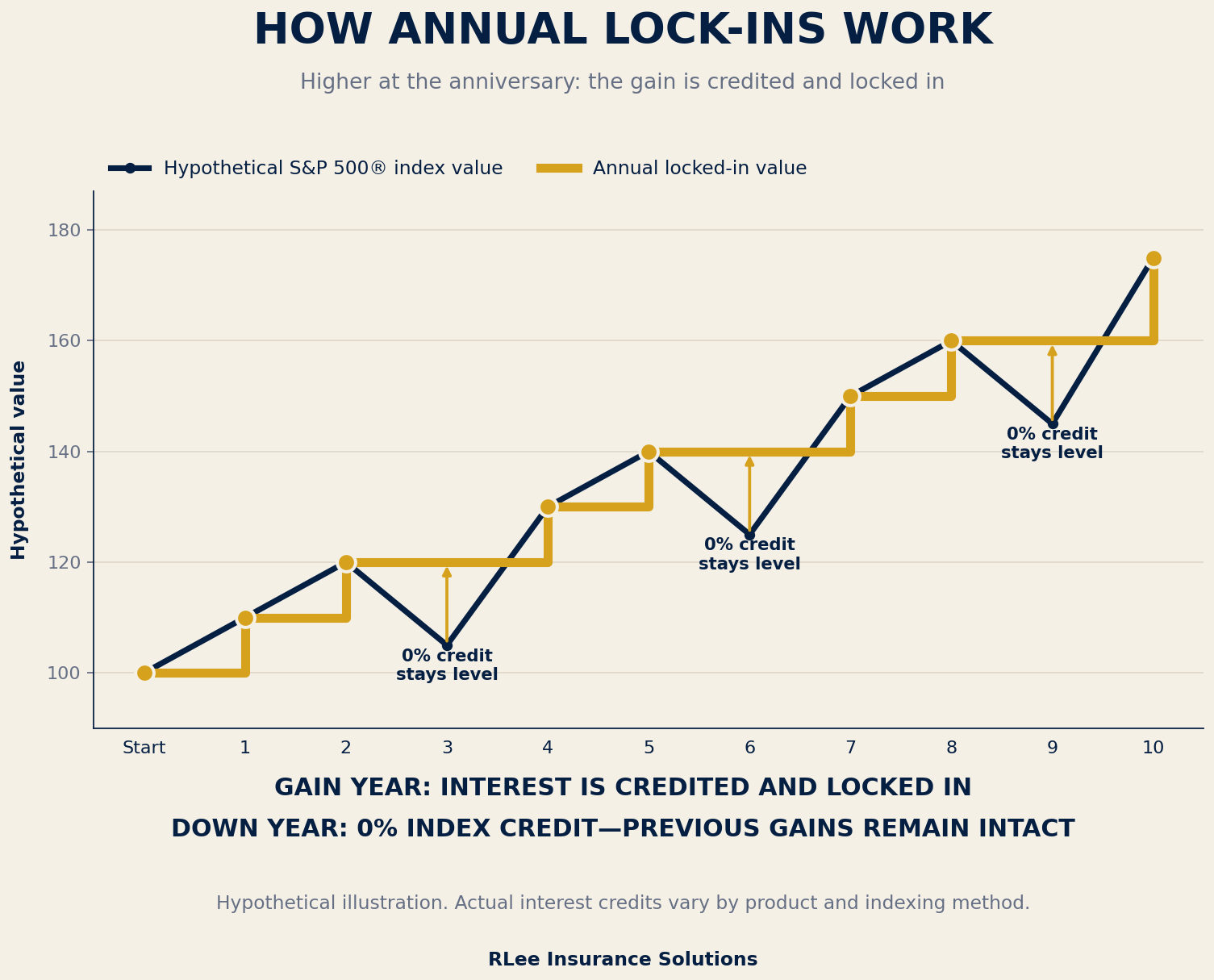
When eligible interest is credited, it becomes part of your protected contract value. A later market decline will not take away interest that has already been credited.

Why Does My Account Currently Show 0%?

With an annual lock-in strategy, the final interest credit is calculated on the contract anniversary. Before that date, your account may show no credited gain because the measurement period has not ended.

If the index is higher on the anniversary date, eligible interest is calculated according to the contract and locked in. If the index is lower, the index credit may be 0%—but you do not lose previously credited interest because of that market decline.

Explore Indexed Annuity Options
Line chart showing annual lock-ins and S&P value
Retirement income timing chart showing tradeoffs
RETIREMENT INCOME PLANNING

When Should Your Retirement Paycheck Begin?

Some annuities allow you to create a dependable income stream that can continue for the rest of your life. You may choose to begin that income immediately—or wait and potentially increase the amount available later.

The right starting date depends on the income you need today, the other resources available to you, and how you want to prepare for the years ahead.

More Than One Product May Be the Answer

For some clients, the strongest strategy is not placing every dollar into a single annuity. An immediate annuity may provide greater income during the first several years of retirement, while another annuity is given time to build a larger income benefit for the future.

With access to real-time rates and thousands of annuity options, I can compare different companies, products and income-starting dates to help you understand what may work best for your retirement.

Compare Your Lifetime Income Options

Lifetime income guarantees depend on the annuity’s payout option or income rider and compliance with all contract requirements. Rider charges, withdrawal limitations and other conditions may apply. Guarantees are backed by the claims-paying ability of the issuing insurance company.

Smiling red-haired woman in white jacket

Why I sell Annuities

“While you are still working, and earning an income, having your money in a investment vehicle that can potentially gain higher rates makes sense. As part of your retirement planning I try to help my clients find a safer way to invest their life savings without the risk of a market down turn, while paying them a potential life time income they can never outlive. “

Robin Lee

Questions to Consider Before Choosing an Annuity

Are annuities safe?

Fixed and fixed indexed annuities are insurance contracts designed to protect principal from direct stock-market losses. However, their guarantees depend on the financial strength and claims-paying ability of the issuing insurance company.

Annuities are not bank accounts and are not insured by the FDIC. State guaranty associations may provide limited protection if an insurer becomes insolvent, subject to state law and coverage limits. For this reason, the insurance company behind the contract is an important part of the comparison.

Fixed and fixed indexed annuities protect principal from direct market losses when the contract is held according to its terms. However, that does not mean money can never be lost.

Withdrawing more than the contract allows during its surrender period may result in surrender charges or a market-value adjustment. Taxes may also apply. With a single premium immediate annuity, the premium is exchanged for a contractual income stream and generally cannot be withdrawn afterward.

We explain these provisions before you purchase an annuity so you understand both the protections and the limitations.

A fixed annuity credits a declared interest rate for a specified period. The rate may be guaranteed for the full surrender period or for a shorter initial period, depending on the contract.

A fixed indexed annuity calculates interest partly according to the performance of a market index, such as the S&P 500. Your money is not invested directly in the index, and the interest credited may be affected by participation rates, caps, spreads, and other contract terms. An indexed annuity does not generally receive the index’s full return or its dividends.

Many deferred annuities allow a limited amount to be withdrawn each year without a surrender charge. The amount available and the way it is calculated vary by contract.

Larger withdrawals may be subject to surrender charges, market-value adjustments, income taxes, or an additional federal tax on certain distributions made before age 59½. An immediate annuity works differently because the original premium has been exchanged for the selected payment stream.

Before choosing an annuity, it is important to preserve enough accessible savings for emergencies and other short-term needs.

No. An annuity is an insurance contract, not a bank deposit, and it is not insured by the FDIC.

The contract’s guarantees are supported by the financial strength and claims-paying ability of the issuing insurance company. State insurance guaranty associations may provide limited protection if a member insurer becomes insolvent, but coverage is determined by state law and should not be treated as a substitute for selecting a financially sound insurance company.

Costs depend on the type of annuity and its specific contract terms. Fixed and fixed indexed annuities may not show a separate annual account fee, but their terms can include surrender charges, market-value adjustments, interest-crediting limitations, and charges for optional benefits or riders.

Surrender charges generally apply when more than the permitted amount is withdrawn during the contract’s surrender period. A single premium immediate annuity does not provide the same withdrawal flexibility because the premium is exchanged for the selected income payments.

We review the surrender schedule, withdrawal provisions, optional-benefit costs, and interest-crediting terms with you before you make a decision.

Annuity earnings generally grow tax-deferred until money is withdrawn. The taxation of a withdrawal or income payment depends partly on whether the annuity was purchased with qualified retirement funds, such as IRA or 401(k) money, or with nonqualified after-tax savings.

Taxable distributions are generally subject to ordinary income-tax rules rather than capital-gains rates. Certain distributions made before age 59½ may also be subject to an additional federal tax unless an exception applies.

Because individual circumstances vary, questions about your particular tax situation should be discussed with a qualified tax professional.

The appropriate choice depends on what you need the money to accomplish.

A fixed annuity may be considered when the priority is a guaranteed interest rate. A fixed indexed annuity may be considered when the goal is principal protection with index-linked interest potential. A single premium immediate annuity may be appropriate when the priority is converting a lump sum into dependable income beginning soon.

We compare your goals, timeline, income needs, access needs, beneficiary preferences, and comfort with risk before recommending any annuity. An annuity is not appropriate for everyone and should not necessarily hold all of a person’s retirement savings.

Find Out Whether an Annuity Fits Your Retirement Goals

Not everyone needs an annuity, and an annuity should not necessarily hold all of your retirement savings. We can review your goals, income needs, access needs, timeline, and comfort with risk to help you determine whether one belongs in your retirement strategy.

Schedule a Personal Annuity Review

(765) 746-6459